Author
Violeta Ashikova
News
Rumen Radev’s future foreign policy: between Russia and Europe
Tuesday 28 April 2026 15:15
Tuesday, 28 April 2026, 15:15
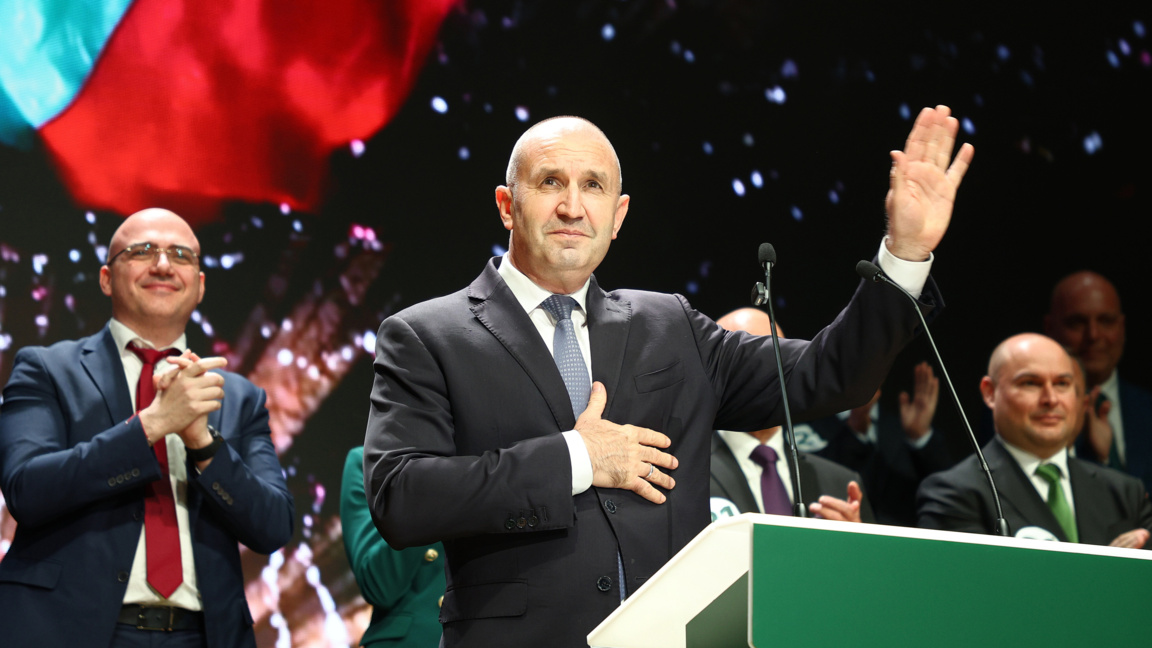
PHOTO BTA
Font size
“An opponent of sanctions against Russia,” “pro-Kremlin,” “Eurosceptic,” “with a favorable stance toward Moscow” - this is how Western analysts describe former Bulgarian president Rumen Radev. At the same time, they stop short of portraying him as a “second Orbán” in the European Union, pointing out the obvious: Radev does not question Bulgaria’s place in the EU and NATO.
However, they also highlight an important point: during his presidential term, Rumen Radev refrained from condemning Russia’s war in Ukraine, criticized EU sanctions, and opposed Bulgaria’s accession to the eurozone without a public referendum.
The elections in Bulgaria in the focus of world media
“There is no room for illusions and chaotic actions in a world that is becoming increasingly alarming, unpredictable and dangerous,” Radev himself stressed during his election campaign. As a political leader, he stated that Bulgaria’s foreign policy should focus on strengthening its defense capabilities and alliances:
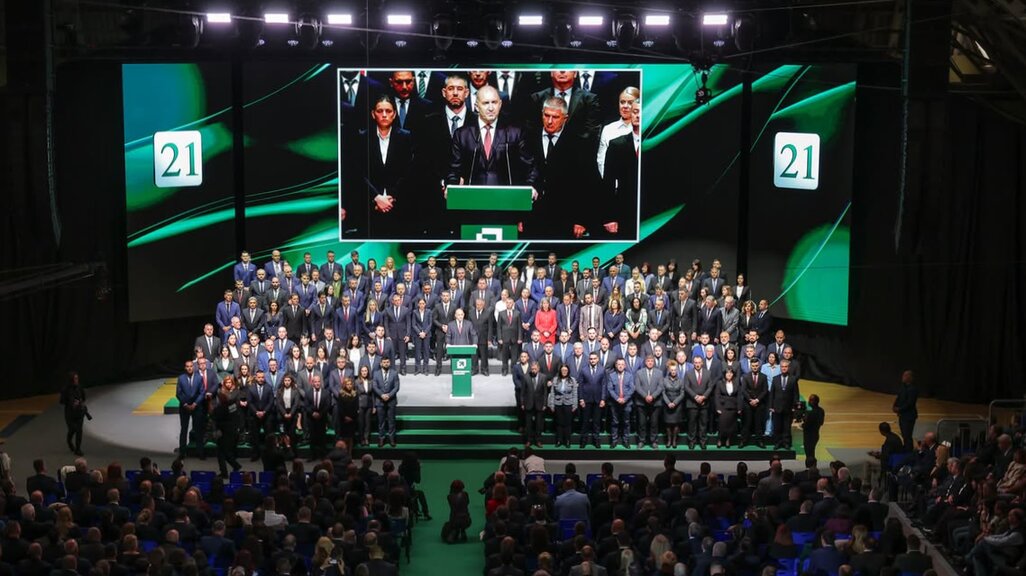
PHOTO Progressive Bulgaria coalition
“This, however, no longer happens through loyalty alone; it also requires competence and determination to defend our national interest within these alliances. Because if we want these alliances to be strong, then the states that form them must also be strong,” said the former Bulgarian head of state and current leader of “Progressive Bulgaria” coalition which will hold a majority in the 52nd National Assembly.
"Progressive Bulgaria" is the winner in the parliamentary vote on April 19
Radev avoids direct confrontation with the West. After his victory in the early parliamentary elections on April 19, he called on European leaders to adopt critical thinking and pragmatism:
“Bulgaria will make efforts to continue along its European path. A strong Bulgaria in a strong Europe needs critical thinking, it needs pragmatism, because Europe has become a victim of its own ambition to be a moral leader in a world without rules. Europe needs once again critical thinking, pragmatic actions and good results, especially in building a new security system”.
Radev encourages Ukraine to seek peace, does not support sending weapons to Kyiv, and says that his statement that Crimea is “Russian” reflects a “strategic reality.” For Euro-Atlantic partners, a controversial moment was an image of Radev with Russian President Vladimir Putin during the final phase of the election campaign. At a campaign event in the town of Dupnitsa in early April, he again firmly reiterated his opposition to military aid for Ukraine:
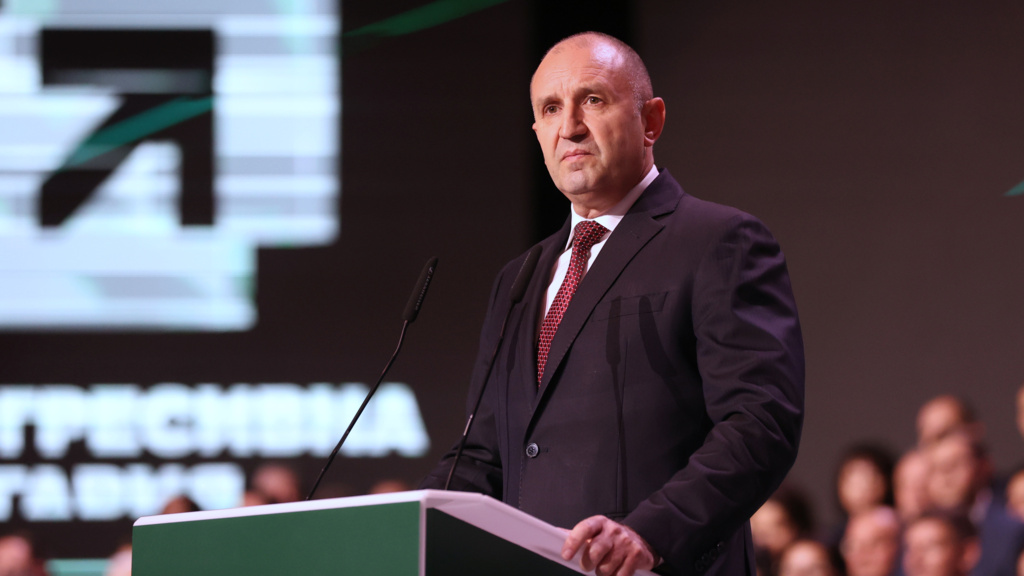
PHOTO BTA
“Our main goal is to preserve peace. Bulgaria must not be drawn in any way into the armed conflicts around us. We did not start these wars, so we should not pay for them. Not a single cent of our money should go to fueling wars; on the contrary, our money should remain for our pensioners, for our children - that is our goal”, said Radev.
Analysts do not expect Rumen Radev to revise the adoption of the euro, block EU decisions, or question the flow of EU funds to Bulgaria.
Bulgarian voters, for their part, believe that election campaigns tend to produce extreme and uncompromising rhetoric, appealing emotionally to the public. After elections comes the time for real politics and solving serious problems. According to people surveyed in Sofia, expectations of Radev are high, but internationally he is likely to be pragmatic and will not sabotage EU policies:
“He cannot pursue an independent policy within the European Union; he has to agree with everything. He will try from time to time to stand up for us, but he cannot, like Orbán, slam his fist on the table and say ‘enough.’”
“We need a pro-European policy, but if we don’t rely on Russia, maybe our economy will be worse off. Europe cannot provide us with fuels. If we are not on good terms with Russia, things will get worse. But we must also be with Europe.”
“I have the opposite opinion - I support the European Union!”
“It is right to pursue a balanced policy, not to be in complete subordination to Brussels. Rumen Radev is a somewhat contradictory figure. Abroad he does one thing, here he says another. I think he will remain a Euro-Atlantic figure - after all, he is a NATO general - but he will try to suggest that we will pursue a more independent policy.”
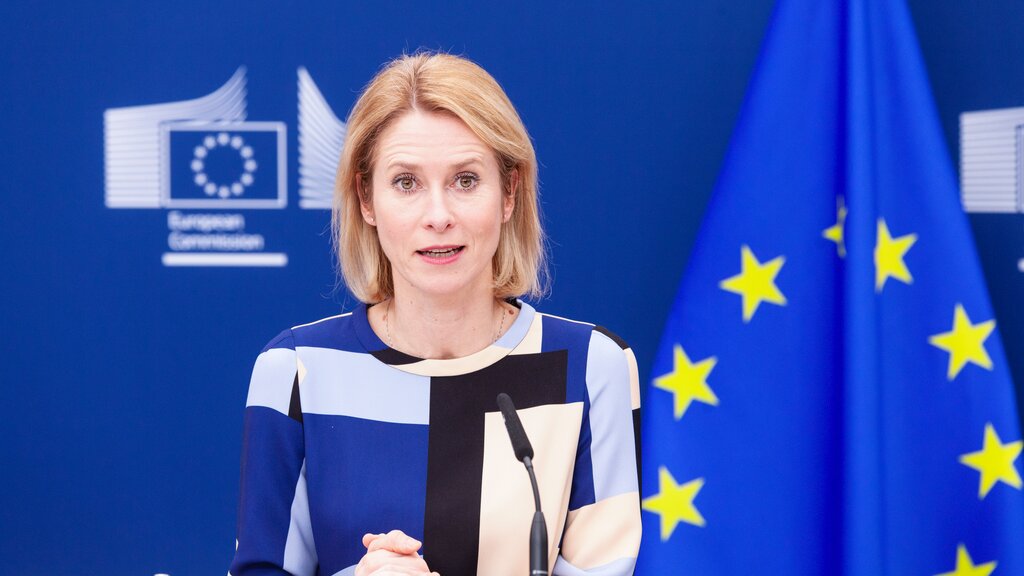
Kaja Kallas, High Representative for Foreign Affairs and Security Policy of the EU
PHOTO European Union, Archive
A representative survey by Alpha Research during the campaign showed that when asked to name a single strategic partner, more than half of Bulgarians (56.3%) chose the European Union, while 19.5% chose Russia.
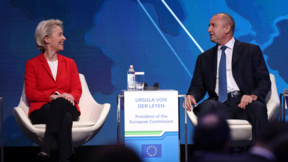
European institutions cautiously welcomed Radev’s victory and expressed readiness to work with the new Bulgarian political actor. The EU High Representative for Foreign Affairs and Security Policy, Kaja Kallas, refrained from early judgments:
EU, US and India congratulate Rumen Radev on election victory
“We are 27 democracies, which means we have elections where people choose their future. Before there is a new government, we have not seen how it will act. We will not rush ahead of events. It is important that everyone comes to the table with a genuine willingness to cooperate, as well as readiness for compromise, because this is required from all. At the beginning, everyone is treated equally; we welcome new colleagues to the table with whom we can cooperate.”
Political reactions from the world after the victory of "Progressive Bulgaria"
“The foreign policy profile of Rumen Radev’s future government will reflect the profile of all those voters who supported ‘Progressive Bulgaria,’” notes Maria Simeonova, director of the Sofia office of the European Council on Foreign Relations, in an interview for BNR’s Euranet Plus programme.
According to her, Radev has managed to attract voters from across the political spectrum - moderately pro-Russian individuals, moderate pro-Europeans, and those skeptical about the eurozone.
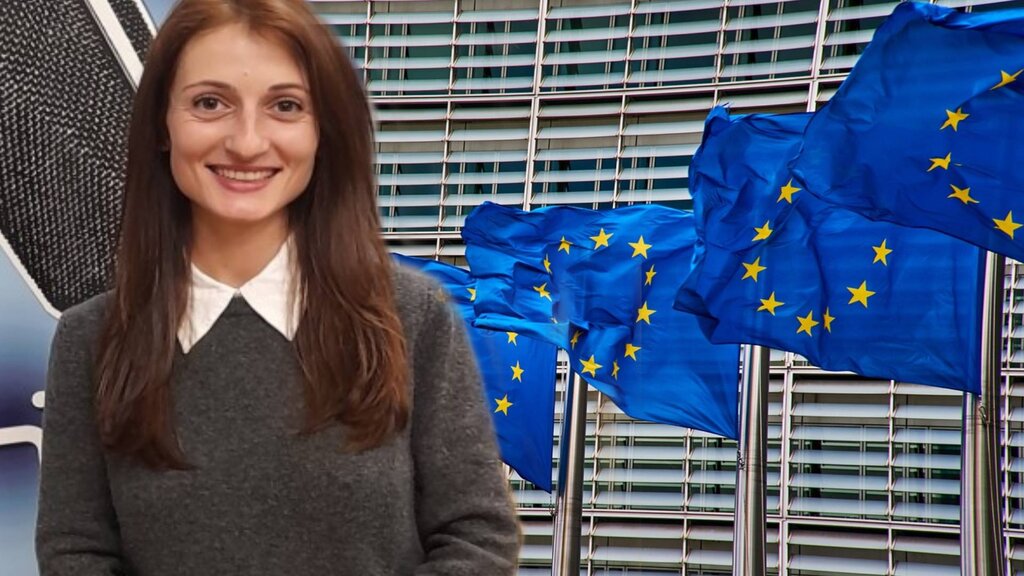
Maria Simeonova - head of the Sofia-based office of the European Council on Foreign Policy
PHOTO Private archive
“This voter profile will limit him from taking radical decisions or proposing radical policies. Bulgaria under Radev will maintain its main foreign policy course - pro-European, pro-NATO - but with more criticism toward decisions taken in international institutions, which will be aimed more at a domestic audience than at European leaders.”
A key issue remains Bulgaria’s policy toward Ukraine and the idea of restoring relations with Russia. Could this clash with EU interests?
“I believe that a scenario in which Bulgaria turns into a country that blocks decisions within the European Union is exaggerated. If Rumen Radev adopts more extreme positions, threatens to use a veto, or actually uses one within the European Union, he would find himself in quite an uncomfortable situation. He himself is a pragmatic politician who understands the risks of such positioning for Bulgaria within the EU. At the same time, Bulgaria still relies heavily on European Union funding, and given the rising prices in the country, even the symbolic absorption of these funds is extremely important for the economy, but also politically for Radev - to be able to say: ‘Here, the parliament passed the necessary reforms so that these funds can be released, absorbed by Bulgarian businesses, and invested accordingly.’
So he stands to gain materially, and also symbolically and politically, by being constructive within the European Union, because the benefits of our membership are extremely significant - something every pragmatic politician understands.
As for the idea of restoring dialogue with Russia, I believe he used this again during his election campaign to attract more voters, framing it within the concept that Bulgaria should pursue an independent, neutral, and balanced foreign policy - which means maintaining dialogue with everyone.
But what would Bulgaria actually gain from this? Natural gas supplies? Since April 2022, when Gazprom halted deliveries, Bulgaria has not experienced any serious difficulties as a result. I would also like to point out that over the past four years, in the context of war on the European continent, the European Union seems to have developed mechanisms and instincts for rapid response to support European citizens", says Maria Simeonova.
What are the key foreign policy priorities that the new Bulgarian government should present to Europe and the world?
“I would start with a domestic issue, but one that is directly linked to Bulgaria’s positioning in Europe - strengthening our institutions. This is related to the rule of law and the fight against corruption. We cannot promote or expect to have weight in foreign policy if our partners and allies are not confident that our institutions are strong and cannot be penetrated by external influence or hybrid attacks. And such threats do exist and will intensify.
From there, Bulgaria, as a mid-sized member state of the European Union, has an interest in a united EU. We are located in a region where we experience various threats and influences, but this actually puts us in a position to speak to our European allies further west and to propose policies. In my view, it is in Bulgaria’s interest to be more active, especially in the Black Sea region. The European Union is a relatively new actor in this region and expects Bulgaria and Romania to put forward initiatives.
We can also be more active regarding EU enlargement. Unfortunately, our dispute with the Republic of North Macedonia has affected the image we had built, but I believe Bulgaria must once again professionalize its foreign ministry and develop capacity toward these two very important regions for us - one to the west and one to the east. We have an interest in both being stable and calm, so that threats do not affect us,” notes Maria Simeonova, director of the Sofia office of the European Council on Foreign Relations.
Read also:
Bulgarians abroad look to Radev for security and predictability
Anti-corruption policies set to dominate Bulgarian politics, analyst says
Photos: BTA, Progressive Bulgaria coalition, EU, archive, BNR - Lyudmila Zhelezova
Editor: Elena Karkalanova
English version: R. Petkova
This publication was created by: Rositsa Petkova